


Enhancing the Quality of Export Travel Luggage and Aligning with International Standards
Jan 13, 2026
Leave a message
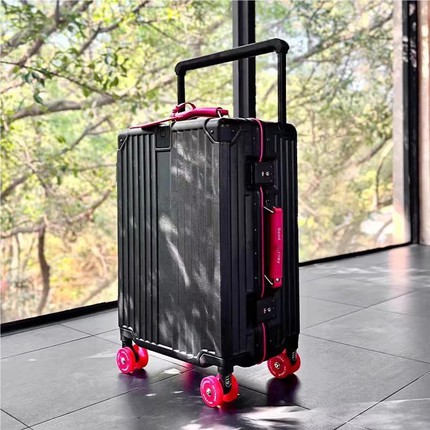

Enhancing the Quality of Export Travel Luggage and Aligning with International Standards
Against the backdrop of deeper global trade integration and the steady recovery of the cross-border tourism market, travel luggage has become an indispensable consumer product with continuously expanding export volume. As the world's largest manufacturing and exporting country of luggage and bags, China accounts for more than one quarter of global production, with products widely distributed across Europe, North America, the Middle East, and Southeast Asia. However, as international markets raise their expectations regarding quality, safety, and environmental compliance, the export-oriented travel suitcase industry is facing growing challenges related to uneven quality and insufficient alignment with international standards. Improving product quality and achieving full compatibility with global standards has therefore become a critical pathway for sustainable, high-quality development.
Quality is the lifeline of export travel luggage bag manufacturers, directly shaping brand reputation and long-term market viability. Low-quality products often suffer from insufficient abrasion resistance, weak hardware components, poor load-bearing trolley systems, and short wheel lifespans. These defects not only undermine the user experience but also pose safety risks, such as damage or loss of personal belongings. In international markets, such issues can trigger recalls, compensation claims, and reputational damage to "Made in China." In contrast, high-quality travel trolley bags with reliable performance can earn consumer trust, enhance brand premiums, and drive sustained sales growth. Industry practice has repeatedly demonstrated that quality upgrades are a decisive factor in expanding overseas market share.
International standards serve as a "passport" for travel luggage entering global markets, and their scope is becoming increasingly comprehensive and stringent. Major economies have established mature regulatory systems centered on the European Union, the United States, and Japan. EU regulations such as REACH strictly control hazardous substances in luggage materials, while durability and wheel fatigue tests are mandatory. U.S. ASTM standards emphasize the endurance of wheeled travel suitcases, requiring handles and shells to withstand repeated heavy loads. Japanese JIS standards focus more on refined user experience, specifying detailed parameters for wheel resistance and trolley smoothness. Beyond traditional mechanical performance, these standards are now expanding into environmental sustainability and smart functionality, including restrictions on harmful chemicals and safety requirements for lithium batteries used in smart travel luggage bags.
To enhance export quality and align with international benchmarks, a full-chain, multi-level approach is essential. At the raw material stage, manufacturers should implement strict supplier evaluation systems and prioritize durable, waterproof, and eco-friendly fabrics, as well as corrosion-resistant, high-strength hardware. During production, quality control must be reinforced at critical processes, such as precision cutting, reinforced stitching at load-bearing points, and smooth trolley assembly. Automated equipment can further improve consistency and stability. At the final inspection stage, comprehensive testing-covering drop impact, vibration, and wheel abrasion-should be conducted in accordance with target-market standards to ensure that travel trolley bags meet international requirements.
Standard system development and international mutual recognition provide strong institutional support for alignment. Enterprises are encouraged to benchmark against advanced global standards, actively participate in formulating group and enterprise standards, and enhance their discourse power in the global luggage and bags market. Meanwhile, cooperation mechanisms under international trade initiatives can promote mutual recognition of testing and certification results, reducing compliance costs and shortening market entry cycles. Policy-level quality improvement programs further reinforce this process by accelerating the convergence between domestic and international standards.
Looking ahead, as consumer demand shifts toward lightweight, intelligent, and environmentally friendly travel luggage, quality upgrading and standard alignment will enter a new stage. Manufacturers should accelerate innovation by adopting recycled materials, developing smart functions such as GPS tracking and intelligent locks, and upgrading testing systems to address emerging safety and performance requirements. With coordinated efforts from enterprises, industry associations, and government authorities, China's export travel suitcases and travel luggage bags are well positioned to shed low-price stereotypes and secure a stronger voice in the global market through superior quality and internationally recognized standards.